
Sector gathers in Porto to debate global challenges, digital transition and Europe’s repositioning
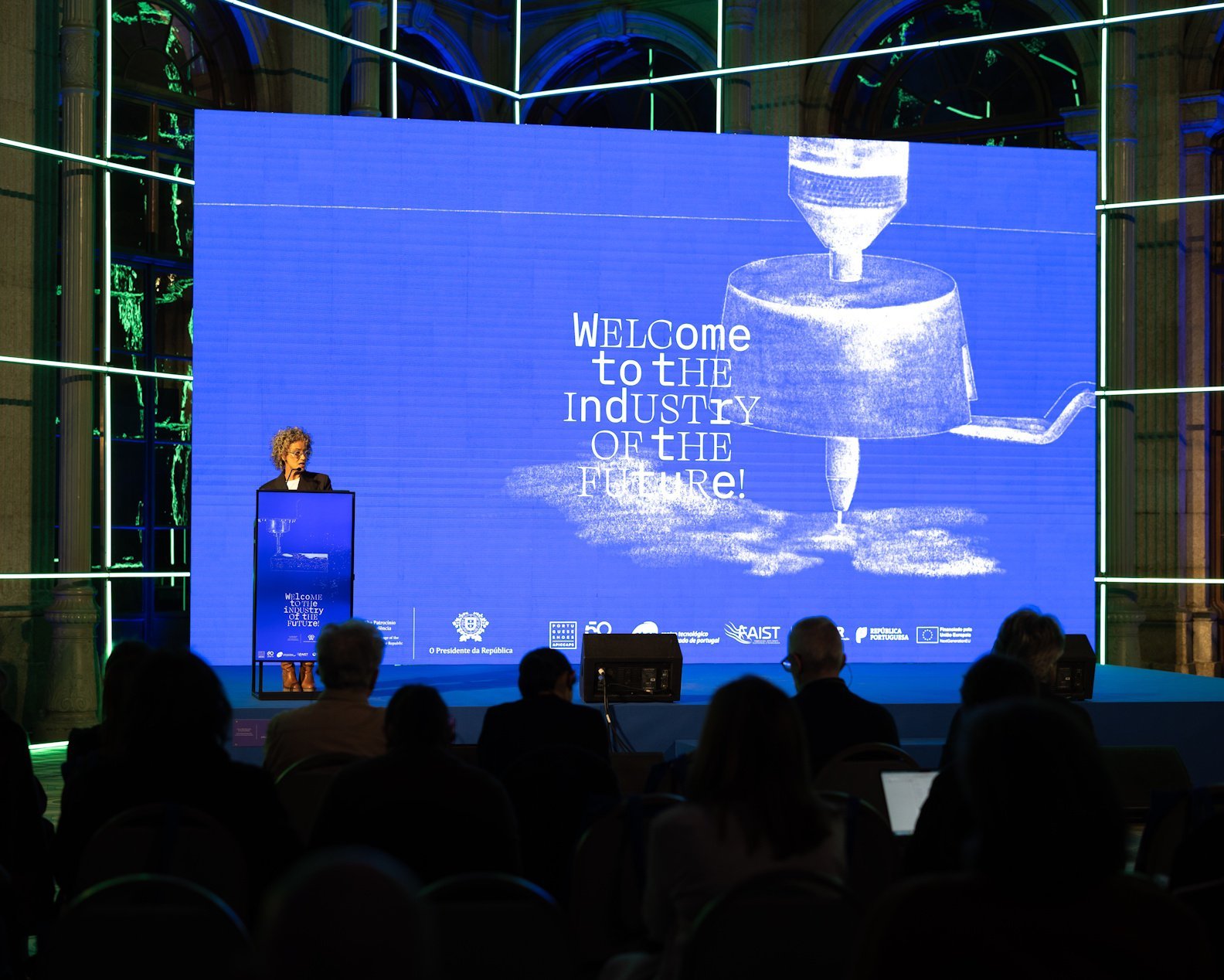
The European footwear industry met on 18 and 19 November at the Palácio da Bolsa, in Porto, in an initiative promoted by APICCAPS and the Footwear Technology Centre of Portugal (CTCP) to discuss the future of the sector, within the framework of the FAIST international conference.
Opening the event, which brought together business leaders, academics and public institutions to analyse the major forces reshaping the global market, Luís Onofre, President of APICCAPS, stressed that projects such as FAIST — representing an investment of over 50 million euros in robotics, automation and sustainability under the RRP — are the answer to "the current concentration of global production — around 90% — in Asia.” "We cannot resign ourselves to a secondary role,” he warned. The European perspective was reinforced by Sofia Moreira de Sousa, Head of the European Commission Representation in Portugal, who described the sector as "an example of strategic foresight”, aligning it with the priorities of the new Clean Industry Pact. Rosana Perán, President of the European Footwear Confederation, highlighted that "it is possible to combine craftsmanship with robotics and artificial intelligence”, strengthening the competitiveness and differentiation of European production.
"Where there are more feet, there are more shoes”
One of the most striking moments of the conference was the presentation by Vasco Rodrigues, Professor at Universidade Católica, who offered a comprehensive analysis of the global evolution of the sector, identifying the factors that have shaped — and will continue to shape — the industry’s path. He highlighted four decisive events: China’s entry into the WTO, which "forever changed global footwear trade”; shifts in consumer preferences; the transformation of sales channels with the rise of e-commerce; and the new challenges posed by major digital platforms.
Rodrigues recalled that China doubled its exports in the first five years after joining the WTO, triggering a global reorganisation that led many international producers to move factories to Asia. In consumption, Asia also maintains its leadership, followed by North America. Europe remains a mature market, with around four pairs per person per year, while Africa emerges as an untapped market.
Looking ahead, the professor pointed to four forces that will shape the next decade: demography, consumer preferences, technological transformation and global economic reconfiguration.
In terms of footwear consumption, Asia once again leads. Europe consumes four pairs per person per year, North America five and Africa one — making it the only market yet to be explored. Trade flows also clearly show Asia as the world’s central hub for the footwear business.
Regarding the future of the industry, Rodrigues highlighted several foreseeable forces. The first is demography: according to United Nations data, Asia and Africa represent the world’s main demographic centres, while Europe is the only continent expected to decline.
Consumer preferences are harder to predict, though comfort, sustainability concerns and consumer trust in products are likely to play a key role. Technology, too, will remain a driving force in shaping the industry’s future.
Finally, on economic grounds, Rodrigues stressed the unpredictability of the path the United States will take, noting that projections point to uneven global economic growth. In Europe, expectations suggest relatively slow progress compared to other regions. At the same time, there is also the risk of an economic crisis affecting China. The future of the footwear market therefore holds major uncertainties, changes and challenges — but also significant opportunities, which each player must grasp in order not to "miss the train of evolution.”
Technology, talent
and new business models
The conference featured various thematic panels. In the debate on automation and robotics, representatives from AMF, Rodiro, Tropimática and Carité stressed that robotisation in footwear is "much more complex than in the automotive industry” due to the variability of materials and collections. The consensus was clear: technology does not replace people — it empowers them.
Another panel explored new business models based on digitalisation, personalisation and artificial intelligence, with examples from Diverge, Bolflex/Rubberlink, DCSI Pro and CTCP. Participants emphasised that personalisation, pair-by-pair production and data integration are already transforming processes, increasing efficiency and reducing waste.
Reindustrialising Europe:
challenge or illusion?
The final panel, with César Araújo (ANIVEC), João Maia (APICCAPS) and Kerstin Jorna (DG Grow), analysed Europe’s position in the global landscape. Speakers defended the need for a level playing field, faster legislative processes and industrial policies that strengthen "Made in Europe”.
João Maia stressed that Europe has lost production share (from 30% three decades ago to less than 3% today), but retains control over the highest value-added stages, such as creativity, brand management and high-end footwear.
The FAIST Conference concluded with the message that the future of the footwear industry will be built at the intersection of technology, talent and tradition. While automation and artificial intelligence are becoming inevitable, craftsmanship and creativity remain essential pillars of Portuguese competitiveness.
The final message was clear: opportunities exist, but they require vision, investment and rapid adaptation — or the risk is missing the "train of evolution.”
The European footwear industry met on 18 and 19 November at the Palácio da Bolsa, in Porto, in an initiative promoted by APICCAPS and the Footwear Technology Centre of Portugal (CTCP) to discuss the future of the sector, within the framework of the FAIST international conference.
Opening the event, which brought together business leaders, academics and public institutions to analyse the major forces reshaping the global market, Luís Onofre, President of APICCAPS, stressed that projects such as FAIST — representing an investment of over 50 million euros in robotics, automation and sustainability under the RRP — are the answer to "the current concentration of global production — around 90% — in Asia.” "We cannot resign ourselves to a secondary role,” he warned. The European perspective was reinforced by Sofia Moreira de Sousa, Head of the European Commission Representation in Portugal, who described the sector as "an example of strategic foresight”, aligning it with the priorities of the new Clean Industry Pact. Rosana Perán, President of the European Footwear Confederation, highlighted that "it is possible to combine craftsmanship with robotics and artificial intelligence”, strengthening the competitiveness and differentiation of European production.
"Where there are more feet, there are more shoes”
One of the most striking moments of the conference was the presentation by Vasco Rodrigues, Professor at Universidade Católica, who offered a comprehensive analysis of the global evolution of the sector, identifying the factors that have shaped — and will continue to shape — the industry’s path. He highlighted four decisive events: China’s entry into the WTO, which "forever changed global footwear trade”; shifts in consumer preferences; the transformation of sales channels with the rise of e-commerce; and the new challenges posed by major digital platforms.
Rodrigues recalled that China doubled its exports in the first five years after joining the WTO, triggering a global reorganisation that led many international producers to move factories to Asia. In consumption, Asia also maintains its leadership, followed by North America. Europe remains a mature market, with around four pairs per person per year, while Africa emerges as an untapped market.
Looking ahead, the professor pointed to four forces that will shape the next decade: demography, consumer preferences, technological transformation and global economic reconfiguration.
In terms of footwear consumption, Asia once again leads. Europe consumes four pairs per person per year, North America five and Africa one — making it the only market yet to be explored. Trade flows also clearly show Asia as the world’s central hub for the footwear business.
Regarding the future of the industry, Rodrigues highlighted several foreseeable forces. The first is demography: according to United Nations data, Asia and Africa represent the world’s main demographic centres, while Europe is the only continent expected to decline.
Consumer preferences are harder to predict, though comfort, sustainability concerns and consumer trust in products are likely to play a key role. Technology, too, will remain a driving force in shaping the industry’s future.
Finally, on economic grounds, Rodrigues stressed the unpredictability of the path the United States will take, noting that projections point to uneven global economic growth. In Europe, expectations suggest relatively slow progress compared to other regions. At the same time, there is also the risk of an economic crisis affecting China. The future of the footwear market therefore holds major uncertainties, changes and challenges — but also significant opportunities, which each player must grasp in order not to "miss the train of evolution.”
Technology, talent
and new business models
The conference featured various thematic panels. In the debate on automation and robotics, representatives from AMF, Rodiro, Tropimática and Carité stressed that robotisation in footwear is "much more complex than in the automotive industry” due to the variability of materials and collections. The consensus was clear: technology does not replace people — it empowers them.
Another panel explored new business models based on digitalisation, personalisation and artificial intelligence, with examples from Diverge, Bolflex/Rubberlink, DCSI Pro and CTCP. Participants emphasised that personalisation, pair-by-pair production and data integration are already transforming processes, increasing efficiency and reducing waste.
Reindustrialising Europe:
challenge or illusion?
The final panel, with César Araújo (ANIVEC), João Maia (APICCAPS) and Kerstin Jorna (DG Grow), analysed Europe’s position in the global landscape. Speakers defended the need for a level playing field, faster legislative processes and industrial policies that strengthen "Made in Europe”.
João Maia stressed that Europe has lost production share (from 30% three decades ago to less than 3% today), but retains control over the highest value-added stages, such as creativity, brand management and high-end footwear.
The FAIST Conference concluded with the message that the future of the footwear industry will be built at the intersection of technology, talent and tradition. While automation and artificial intelligence are becoming inevitable, craftsmanship and creativity remain essential pillars of Portuguese competitiveness.
The final message was clear: opportunities exist, but they require vision, investment and rapid adaptation — or the risk is missing the "train of evolution.”