
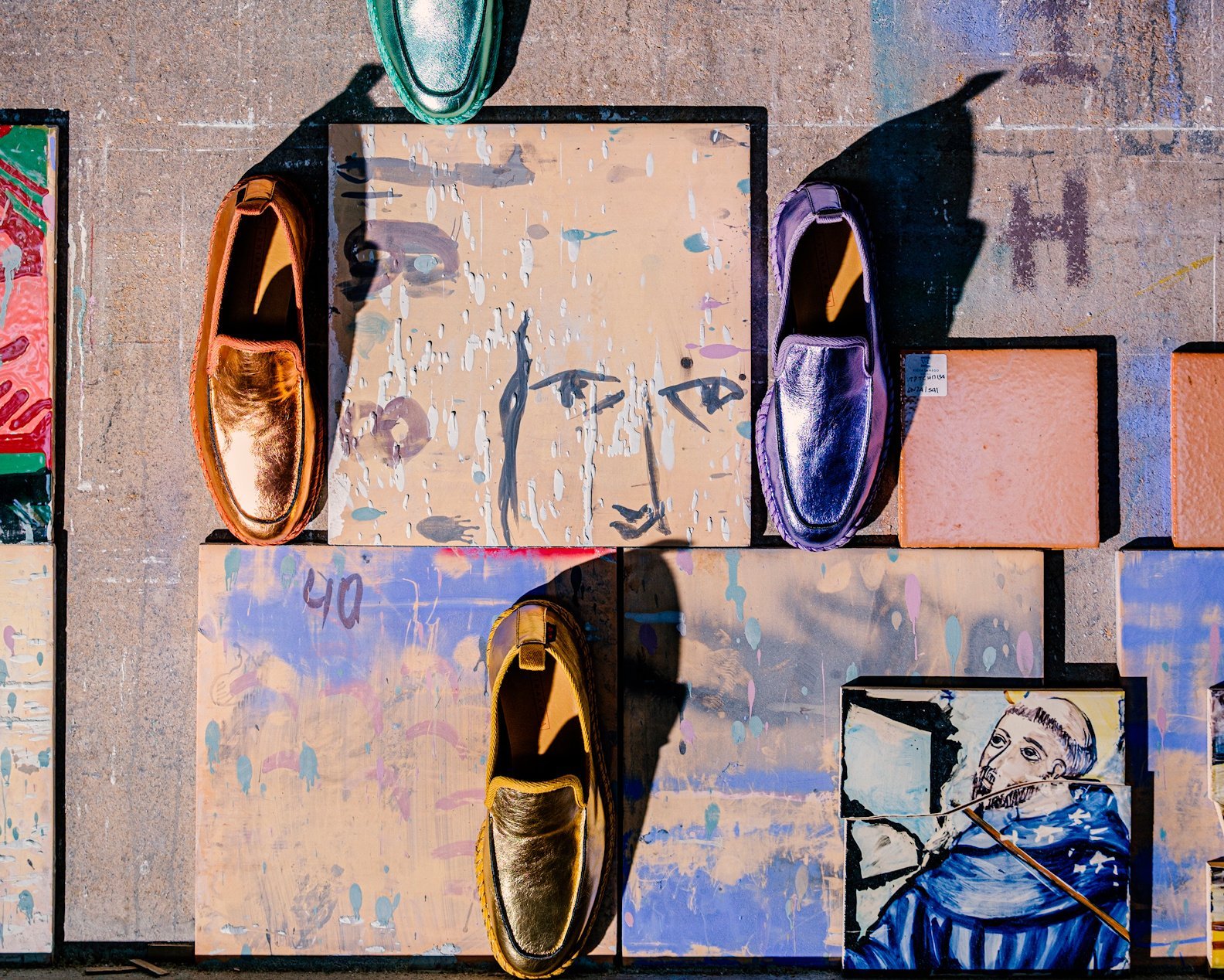
The pencil glides sharply across the white sheet, bringing with it a dream of creation. However, it is in the fold of the fabric, the precise cut of the skin and the line of a suitcase where the magic truly happens. The hands that guide the process are wise hands, which have learnt the art of craftsmanship over time. They know the secrets of the material, and their meticulous techniques allow Portugal to create true works of art. This know-how is yet another legacy and heritage that should be preserved.
"Portugal has an incredibly rich heritage of artisanal techniques and a lot of potential to explore that patrimony, whether at a research level or in dialogue with the different agents in the sector”, explains Joana Jorge. The project manager at ModaLisboa emphasises that, "as a territory, traditional know-how is complemented by a great deal of technical skill and craftsmanship in the production of various small-scale products and industries”.
In the fashion sector, a heritage of fine details and know-how comes together with the creativity of designers who reinterpret the past to make it wearable and usable. "Ultimately, it seems that we reject the know-how accumulated over generations, neglect national fashion, and waste an immense amount of talent”, says Paulo Gonçalves, the spokesperson for APICCAPS.
"Designer fashion is one of our poetic identities”
"I believe that there is designer fashion in Portugal, even if it is not widely recognised. This identity has been becoming more prominent, with a certain maturity starting to emerge; essentially because the connection between projects is starting to be understood”, explained Nuno Baltazar.
The designer from Porto argues that "what makes designer fashion recognisable is the cultural identity of each country, reflected in every individual work. Portuguese culture has a guiding influence on different creators, from obvious aspects such as tile art in the work of Nuno Gama and Storytailors, to poetry and literature in my work and that of José António Tenente, and more traditional elements of our culture such as Bèhen and Maria Gambina, or fado in my work and that of Nuno Gama...”.
"Sometimes, that thread is not widely recognised,” continues Baltazar. "Let’s look at the Six of Antwerp”. In the 80s, Ann Demeulemeester, Dries Van Noten, Dirk Bikkembergs, Dirk Van Saene, Marina Yee and Walter Van Beirendonck – recent graduates of the Royal Academy of Fine Arts in Antwerp – went to London and presented a joint collection. This collaboration led to the revival of the avant-garde fashion movement, with each designer bringing their own style to the table while creating an identity for Belgian fashion. "Despite all being very different from each other, this group of designers ended up defining the Belge style. They all have very different styles,” explains Baltazar.
The designer, who regularly attends ModaLisboa, believes that "those who create designer fashion sooner or later attain national influence because of the authorial nature of their work and their unique style”. In fact, Baltazar says that "not all designers create designer fashion because they don’t work in an authorial way. In other words, the piece could be by that designer or by someone else: there’s no personal connection. It’s more about a fluid aesthetic than its history”. Conversely, "an author gives their work a stamp. When an author is very strong, they imprint their identity wherever they are. There are codes, but the authorial code is so strong that it stands out”.
"The Portuguese designer fashion scene is rich, with designers and brands that speak different languages and occupy different positions. I would emphasise the quality of the designs, which are produced locally with great care and respect. The national fashion works with cuts, materials and proportions in a contemporary and sophisticated way”, explains Joana Jorge. "Portugal has a strong designer fashion identity that is recognised beyond its borders. Over the years, we have collaborated to promote this message – that Portugal is not only a well-known producer, but also a country of creation, design, innovation and modernity”, argues Joana.
But what is needed to boost this national capacity? "We lack investment to leverage our projects. We have a small structure, and we are much more than just creative directors. We need to stop comparing ourselves with international brands. In truth, we must view fashion as a niche. Just as romance and poetry are different genres in literature, designer fashion is one of our poetic identities. It may be difficult to develop, but it must be protected and supported”.
For Paulo Gonçalves, "fashion is culture, art, democracy and freedom. It is critical thinking and respect for our legacy, but also a sneak peek into progress and modernity. It’s a promise of the future. But it’s also a business. In Portugal, the textile, clothing, footwear and jewellery sectors employ over 300 thousand people and export more than 8 billion euros annually”. The APICCAPS spokesperson emphasises that "fashion matters. For this reason, national fashion, especially designer fashion, as an artistic and cultural expression, cannot be a casualty”.
Is there national know-how?
The question is inevitable: how does Portugal position itself internationally regarding know-how? According to Nuno Baltazar, Portugal has both creative and execution know-how. "We are one of the most sought-out countries for producing goods for major luxury brands. Our production know-how is clearly highly developed. We also have highly skilled craftspeople specialising in areas such as embroidery, cutting, dressmaking and textile development. It is important to preserve and maximise this”.
The designer adds that "the very transversal experience of executing the collection – wearability, attention to detail — these are all very Portuguese characteristics. We are sought after for our expertise and excellence”.
"Acknowledging what the country has achieved as a producer with great expertise and a strong position in terms of sustainable and less harmful solutions is the result of systematic work by several partners and agents, in which the roles of APICCAPS and CENIT/ANIVEC are particularly notable. It is important to promote that expertise combined with creativity, which gives our country a unique position and reinforces its ability to capitalise on added value”, says Joana Jorge.
"It’s also important to note that there is a generation of younger designers who are committed to creating their own research and lexicon, and who have contributed significantly to raising awareness of the quality and distinctiveness of Portuguese designer fashion beyond our borders”, explains the person responsible for the ModaLisboa project.
Joana Jorge highlights as well that "our human dimension is our greatest asset and what sets us apart. Our expertise decodes into various techniques and types, but I believe that manual dexterity in creation and finishing, as well as experience in modelling and processes, are essential for achieving quality and distinction”.
And if, in Baltazar’s words, designer fashion happens "when they have something to tell or translate from their innermost universe and then make it public”, we can conclude that the better they are at embodying the identity and heritage of not only their country, but also a legacy of arts passed down from generation to generation over centuries, the better it will be. This creates a profound dialogue between the past, present, and future.