
International brands are already using Portuguese high-tech products
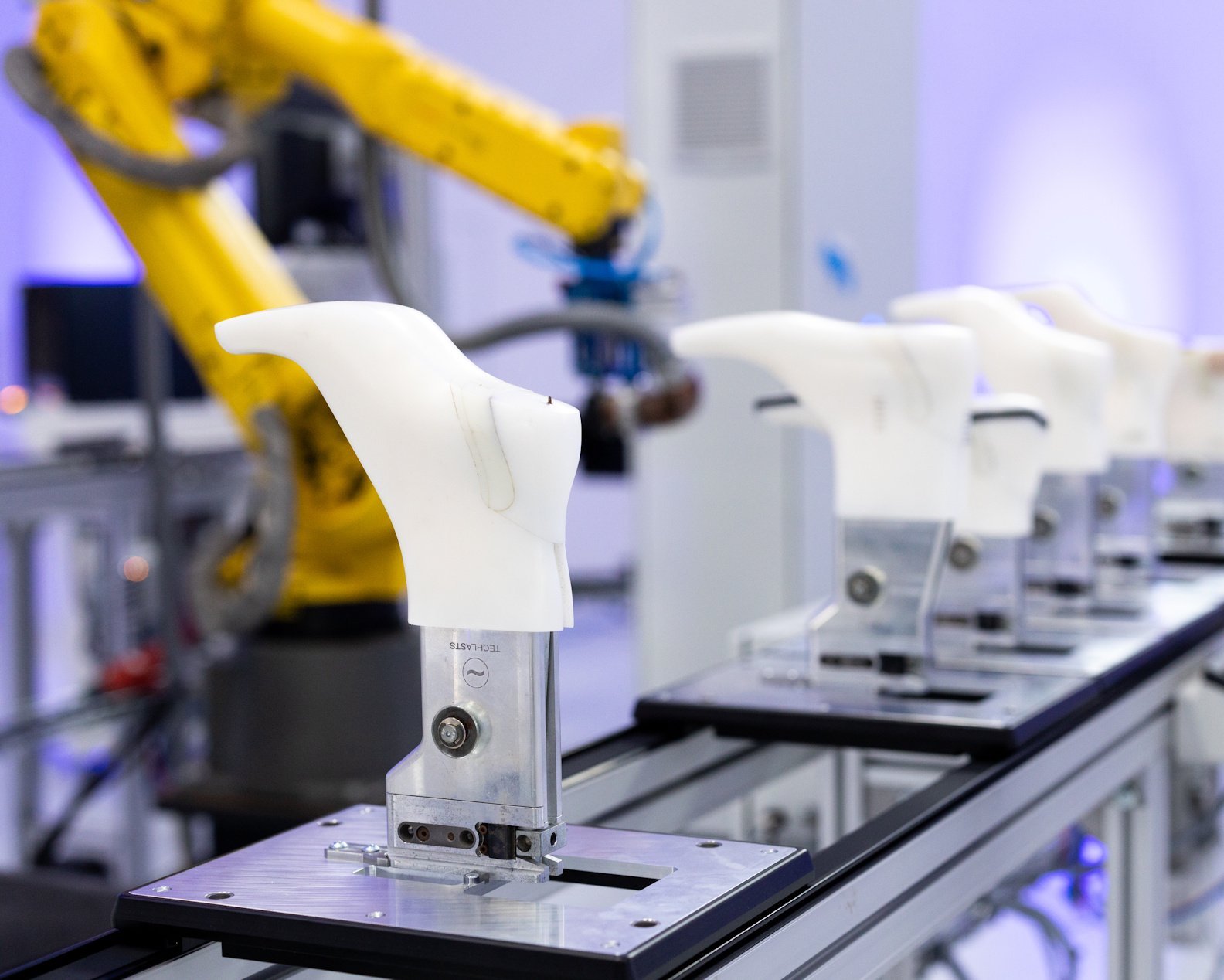
Birkenstock, Burberry, Columbia, Hermès and Nike. These are some of the international brands that already use Portuguese high technology in their production units around the world. It’s a reality that will deepen over the next few years due to major investments being made as part of the FAIST mobilisation agenda.
"We have created a whole ecosystem in Portugal that favours productive innovation and strengthens the link between universities and companies”, says Florbela Silva. For the coordinator of the FAIST project, which involves a PRR investment of around 50 million euros in automation and robotics, "the Portuguese footwear industry is already one of the most advanced in the world”, but the ambition remains unchanged.
According to the engineer, "in order to remain at the forefront, the footwear sector must make a permanent contribution by investing in new, cutting-edge solutions to respond to a very demanding market dominated by Asian players”. "If you think about it”, she says, "in the last decade, only Portugal has managed to increase production in Europe, precisely because of its ability to take risks with disruptive approaches”.
According to the engineer, "in order to remain at the forefront, the footwear sector must make a permanent contribution by investing in new, cutting-edge solutions to respond to a very demanding market dominated by Asian players”. "If you think about it”, she says, "in the last decade, only Portugal has managed to increase production in Europe, precisely because of its ability to take risks with disruptive approaches”.
In the case of Mind, the company is already exporting "its entire footwear product range, from conceptual design and product design solutions, product engineering to cutting solutions, automatic nesting or consumer estimation tools”, reveals Fernando Vasconcelos.
The portfolio of the company includes a hundred clients such as Aokang, Berkemann, Birkenstock, Burberry, Columbia Footwear, Grendene or Hermès, to name a few of the best-known brands.
"There is a very positive general perception of Portuguese companies that develop technological products in the footwear sector”, stresses Fernando Vasconcelos, "with national companies being held up as examples in international sales for the quality and innovation of their solutions”. The work of APICCAPS and CTCP in the development of the Portuguese industry is also cited as an example and a model.
Fernando Ferro adds that "Portuguese companies are known for their combination of tradition and innovation, investing in advanced technologies and efficient production methods that improve the overall quality of their products”. According to the head of DCSI and Techlast, part of the Fernando Ferro & Irmão, S.A. universe, "the fact that Portugal is a leader in the field of sustainability, using environmentally friendly materials and practices, has greatly enhanced its brands”. The same goes for digitalisation and automation, which "have contributed to the competitiveness of the sector, allowing technological solutions to be customised”.
"There is a very positive general perception of Portuguese companies that develop technological products in the footwear sector”, stresses Fernando Vasconcelos, "with national companies being held up as examples in international sales for the quality and innovation of their solutions”. The work of APICCAPS and CTCP in the development of the Portuguese industry is also cited as an example and a model.
Fernando Ferro adds that "Portuguese companies are known for their combination of tradition and innovation, investing in advanced technologies and efficient production methods that improve the overall quality of their products”. According to the head of DCSI and Techlast, part of the Fernando Ferro & Irmão, S.A. universe, "the fact that Portugal is a leader in the field of sustainability, using environmentally friendly materials and practices, has greatly enhanced its brands”. The same goes for digitalisation and automation, which "have contributed to the competitiveness of the sector, allowing technological solutions to be customised”.
The FAIST effect
Created as a response to the needs of the footwear and leather goods sector, with a focus on digital technologies and the sustainability of processes and products, the FAIST Agenda - Agile, Intelligent, Sustainable and Technological Factory is changing the face of the sector, contributing "to greater efficiency and profitability, a quick response to the market, improved working conditions and product differentiation”, points out Florbela Silva.
"By modernising and transforming the production processes of our national partners, we are creating solutions that not only increase efficiency and competitiveness, but also set new standards of excellence in the sector”, she recalls.
"The FAIST project not only transforms our production capacity, but also positions our company competitively on the global stage, guaranteeing a promising and innovative future”, she concludes.
For Fernando Vasconcelos, "all the applied innovation projects developed recently by the sector have allowed us to reposition the industry” on the international competitive stage. "There are naturally almost immediate material contributions through the introduction of new products”, explains the director of Mind, "but perhaps more important is the immaterial contribution, through participation and the exchange of ideas and experiences with all the partners”.
For Fernando Vasconcelos, "all the applied innovation projects developed recently by the sector have allowed us to reposition the industry” on the international competitive stage. "There are naturally almost immediate material contributions through the introduction of new products”, explains the director of Mind, "but perhaps more important is the immaterial contribution, through participation and the exchange of ideas and experiences with all the partners”.