
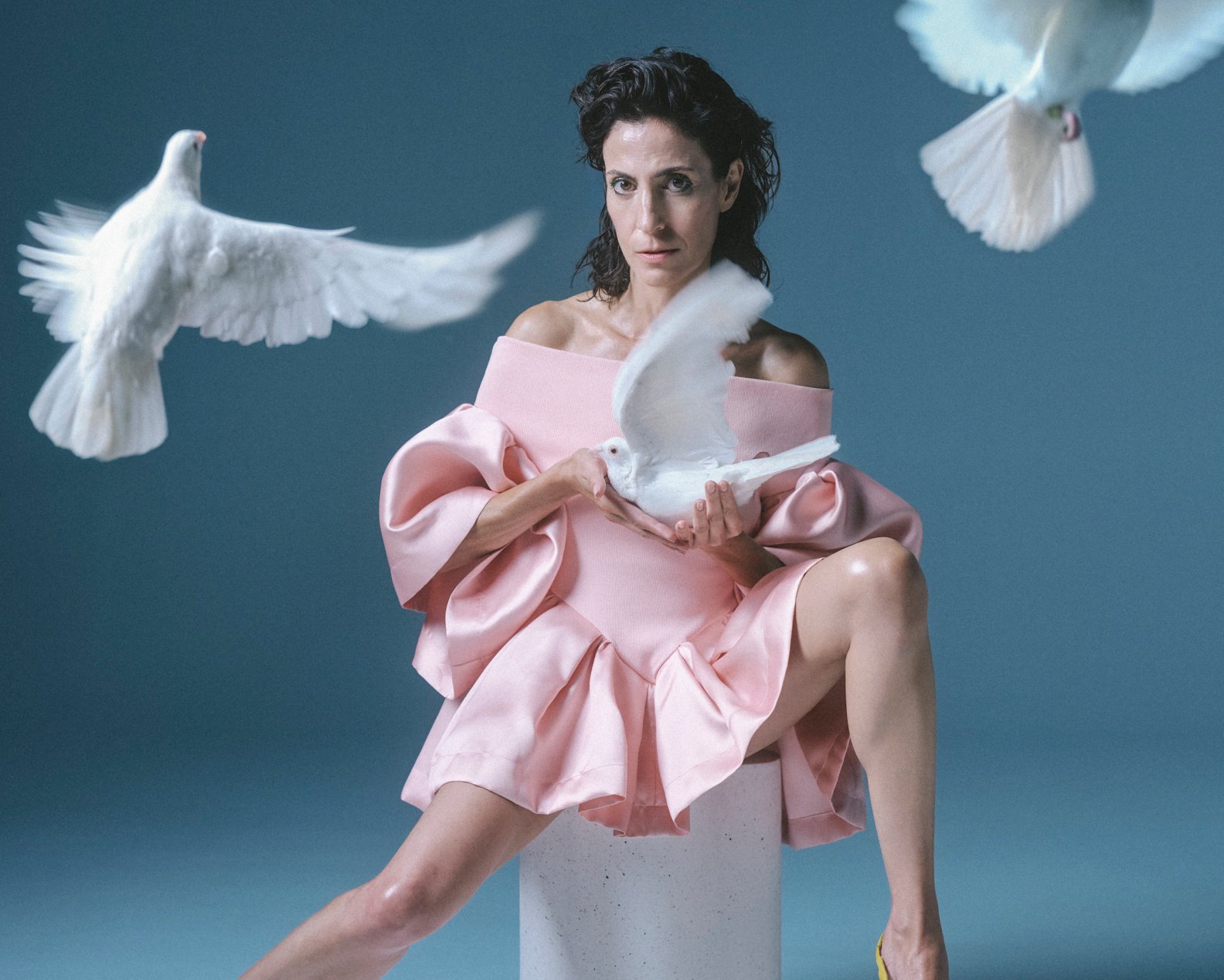
The Portuguese fashion industry will take centre stage at the United Nations in New York on 10 September, during New York Fashion Week, with "Made to Matter: Portugal”, an initiative promoted within the framework of the United Nations Fashion and Lifestyle Network and held alongside New York Fashion Week.
Developed by APICCAPS – the Portuguese Footwear, Components and Leather Goods Manufacturers’ Association – and CENIT – Textile Intelligence Centre, with the support of AICEP – the Portuguese Trade & Investment Agency, the initiative aims to strengthen the international profile and competitiveness of the Portuguese fashion industry.
Held as part of the annual meeting of the United Nations Fashion and Lifestyle Network, the event will take place at the United Nations Headquarters and will harness the international visibility of New York Fashion Week to promote discussion around the Sustainable Development Goals. Under the theme "Made to Matter”, Portugal will showcase an industrial model that combines know-how, innovation, collaboration, quality and sustainability, demonstrating how these factors have helped build a globally competitive fashion and footwear industry.
With more than 6,000 companies and exports exceeding €7 billion, the Portuguese fashion industry is one of the country’s leading export sectors and one of the most internationally oriented areas of Portuguese manufacturing. Present in the world’s major markets and integrated into the value chains of some of the most prominent international brands, the industry stands out for its flexibility, technical expertise, responsiveness, proximity manufacturing and industrial know-how accumulated over generations.
Over the past three years, the sector has mobilised more than €200 million in investment, with support from Portugal’s Recovery and Resilience Plan (PRR), through the Lusitano project – whose internationalisation agenda was led by CENIT – and BioShoes4All, coordinated by APICCAPS. Investment has focused particularly on innovation, sustainability, digitalisation, new materials and the modernisation of production processes. This effort is accelerating the transformation of an industry that increasingly aims to compete not on price, but on knowledge, technology, creativity, quality and its ability to develop high value-added solutions for international clients.
"Presenting the Portuguese fashion industry at the United Nations represents recognition of the transformation our companies have been undertaking. Portugal has a modern, highly skilled and export-oriented industry, capable of combining decades of accumulated know-how with technology, innovation and new environmental requirements. We want to show the world that manufacturing in Europe, and particularly in Portugal, is today a competitive, responsible and future-oriented choice,” says César Araújo, President of the Executive Committee of the Lusitano Project consortium, who will present the project’s main developments.
The Lusitano Agenda aims to promote the reindustrialisation of Portugal’s textile and clothing industry through R&D, productive innovation, training and internationalisation activities, with the goal of strengthening the sector’s industrial and technological capabilities and helping to bring strategic components of its value chain back to Europe. These include the ability to produce yarns from recycled and natural fibres and, subsequently, to develop innovative, high value-added textile and clothing products.
Luís Onofre, President of APICCAPS, also highlights the strategic importance of Portugal’s presence: "The Portuguese industry has demonstrated that tradition and innovation are not opposing concepts. We have companies with decades of experience that are now at the forefront of research, automation, new materials and sustainability. The investments made in recent years reflect a very clear ambition: we want Portugal to be internationally recognised as a benchmark for the new generation of fashion, combining creativity and industrial excellence with increasingly responsible production.”
Within the footwear sector, particular attention will be given to the BioShoes4All project, which aims to transform the Portuguese footwear industry into an international benchmark for the development of sustainable solutions.
César Araújo and Luís Onofre will take part in one of the programme’s central conversations, moderated by Yasmine Dahlberg of The Business of Fashion. The discussion will explore how Portugal has built a globally competitive fashion and footwear industry without compromising on quality or sustainability, as well as the lessons the Portuguese model can offer other manufacturing countries. The programme also includes Annemarie Hou, Executive Director of the United Nations Office for Partnerships, and Carlos Moura, Director and Trade and Investment Commissioner USA at AICEP.
The initiative will also showcase Portuguese creativity and technological capabilities. The programme includes a showcase dedicated to the work, materials and craftsmanship of Portuguese designers, as well as a second conversation focused on the future of the industry, addressing technical innovation, new materials, sustainability and collaboration throughout the value chain. Participants include Joana Duarte, founder and creative director of Behén; designer and entrepreneur Armando Cabral; Maria José Ferreira, Research Director at the Portuguese Footwear Technology Centre; and Kaleigh Tirone Nunes of Petratex.
Portugal’s presence at the United Nations therefore aims to showcase an industry encompassing textiles, clothing, footwear, components and leather goods that is responding to major global challenges through investment in knowledge and technology. Material innovation, product durability, process efficiency, circularity and greater collaboration between research centres, manufacturers, brands and designers will be at the heart of the discussion, demonstrating that sustainability and competitiveness can be complementary dimensions of the same industrial strategy. This is precisely one of the key messages of the event.
"Portugal does not simply want to keep pace with the future of fashion; it wants to help shape it. We have the talent, technology and industrial capabilities to turn sustainability and innovation into competitive advantages in international markets,” says Carlos Moura. The head of AICEP’s New York office adds: "The United States is a strategic market for Portuguese fashion. There is a significant opportunity to bring our companies closer to brands, partners and investors looking for quality, innovation and increasingly responsible production.”
Through "Made to Matter: Portugal”, AICEP, APICCAPS and CENIT / ANIVEC aim to strengthen the international positioning of Portuguese fashion as a complete, innovative, sustainable and globally oriented industrial ecosystem. Before an international audience of brands, designers, exporters, textile and leather manufacturers, investors, sustainability experts and policymakers, Portugal will seek to demonstrate at the United Nations that quality, longevity and responsible production are not barriers to competitiveness, but can instead become some of the key drivers of the future success of the global fashion industry.
Developed by APICCAPS – the Portuguese Footwear, Components and Leather Goods Manufacturers’ Association – and CENIT – Textile Intelligence Centre, with the support of AICEP – the Portuguese Trade & Investment Agency, the initiative aims to strengthen the international profile and competitiveness of the Portuguese fashion industry.
Held as part of the annual meeting of the United Nations Fashion and Lifestyle Network, the event will take place at the United Nations Headquarters and will harness the international visibility of New York Fashion Week to promote discussion around the Sustainable Development Goals. Under the theme "Made to Matter”, Portugal will showcase an industrial model that combines know-how, innovation, collaboration, quality and sustainability, demonstrating how these factors have helped build a globally competitive fashion and footwear industry.
With more than 6,000 companies and exports exceeding €7 billion, the Portuguese fashion industry is one of the country’s leading export sectors and one of the most internationally oriented areas of Portuguese manufacturing. Present in the world’s major markets and integrated into the value chains of some of the most prominent international brands, the industry stands out for its flexibility, technical expertise, responsiveness, proximity manufacturing and industrial know-how accumulated over generations.
Over the past three years, the sector has mobilised more than €200 million in investment, with support from Portugal’s Recovery and Resilience Plan (PRR), through the Lusitano project – whose internationalisation agenda was led by CENIT – and BioShoes4All, coordinated by APICCAPS. Investment has focused particularly on innovation, sustainability, digitalisation, new materials and the modernisation of production processes. This effort is accelerating the transformation of an industry that increasingly aims to compete not on price, but on knowledge, technology, creativity, quality and its ability to develop high value-added solutions for international clients.
"Presenting the Portuguese fashion industry at the United Nations represents recognition of the transformation our companies have been undertaking. Portugal has a modern, highly skilled and export-oriented industry, capable of combining decades of accumulated know-how with technology, innovation and new environmental requirements. We want to show the world that manufacturing in Europe, and particularly in Portugal, is today a competitive, responsible and future-oriented choice,” says César Araújo, President of the Executive Committee of the Lusitano Project consortium, who will present the project’s main developments.
The Lusitano Agenda aims to promote the reindustrialisation of Portugal’s textile and clothing industry through R&D, productive innovation, training and internationalisation activities, with the goal of strengthening the sector’s industrial and technological capabilities and helping to bring strategic components of its value chain back to Europe. These include the ability to produce yarns from recycled and natural fibres and, subsequently, to develop innovative, high value-added textile and clothing products.
Luís Onofre, President of APICCAPS, also highlights the strategic importance of Portugal’s presence: "The Portuguese industry has demonstrated that tradition and innovation are not opposing concepts. We have companies with decades of experience that are now at the forefront of research, automation, new materials and sustainability. The investments made in recent years reflect a very clear ambition: we want Portugal to be internationally recognised as a benchmark for the new generation of fashion, combining creativity and industrial excellence with increasingly responsible production.”
Within the footwear sector, particular attention will be given to the BioShoes4All project, which aims to transform the Portuguese footwear industry into an international benchmark for the development of sustainable solutions.
César Araújo and Luís Onofre will take part in one of the programme’s central conversations, moderated by Yasmine Dahlberg of The Business of Fashion. The discussion will explore how Portugal has built a globally competitive fashion and footwear industry without compromising on quality or sustainability, as well as the lessons the Portuguese model can offer other manufacturing countries. The programme also includes Annemarie Hou, Executive Director of the United Nations Office for Partnerships, and Carlos Moura, Director and Trade and Investment Commissioner USA at AICEP.
The initiative will also showcase Portuguese creativity and technological capabilities. The programme includes a showcase dedicated to the work, materials and craftsmanship of Portuguese designers, as well as a second conversation focused on the future of the industry, addressing technical innovation, new materials, sustainability and collaboration throughout the value chain. Participants include Joana Duarte, founder and creative director of Behén; designer and entrepreneur Armando Cabral; Maria José Ferreira, Research Director at the Portuguese Footwear Technology Centre; and Kaleigh Tirone Nunes of Petratex.
Portugal’s presence at the United Nations therefore aims to showcase an industry encompassing textiles, clothing, footwear, components and leather goods that is responding to major global challenges through investment in knowledge and technology. Material innovation, product durability, process efficiency, circularity and greater collaboration between research centres, manufacturers, brands and designers will be at the heart of the discussion, demonstrating that sustainability and competitiveness can be complementary dimensions of the same industrial strategy. This is precisely one of the key messages of the event.
"Portugal does not simply want to keep pace with the future of fashion; it wants to help shape it. We have the talent, technology and industrial capabilities to turn sustainability and innovation into competitive advantages in international markets,” says Carlos Moura. The head of AICEP’s New York office adds: "The United States is a strategic market for Portuguese fashion. There is a significant opportunity to bring our companies closer to brands, partners and investors looking for quality, innovation and increasingly responsible production.”
Through "Made to Matter: Portugal”, AICEP, APICCAPS and CENIT / ANIVEC aim to strengthen the international positioning of Portuguese fashion as a complete, innovative, sustainable and globally oriented industrial ecosystem. Before an international audience of brands, designers, exporters, textile and leather manufacturers, investors, sustainability experts and policymakers, Portugal will seek to demonstrate at the United Nations that quality, longevity and responsible production are not barriers to competitiveness, but can instead become some of the key drivers of the future success of the global fashion industry.