
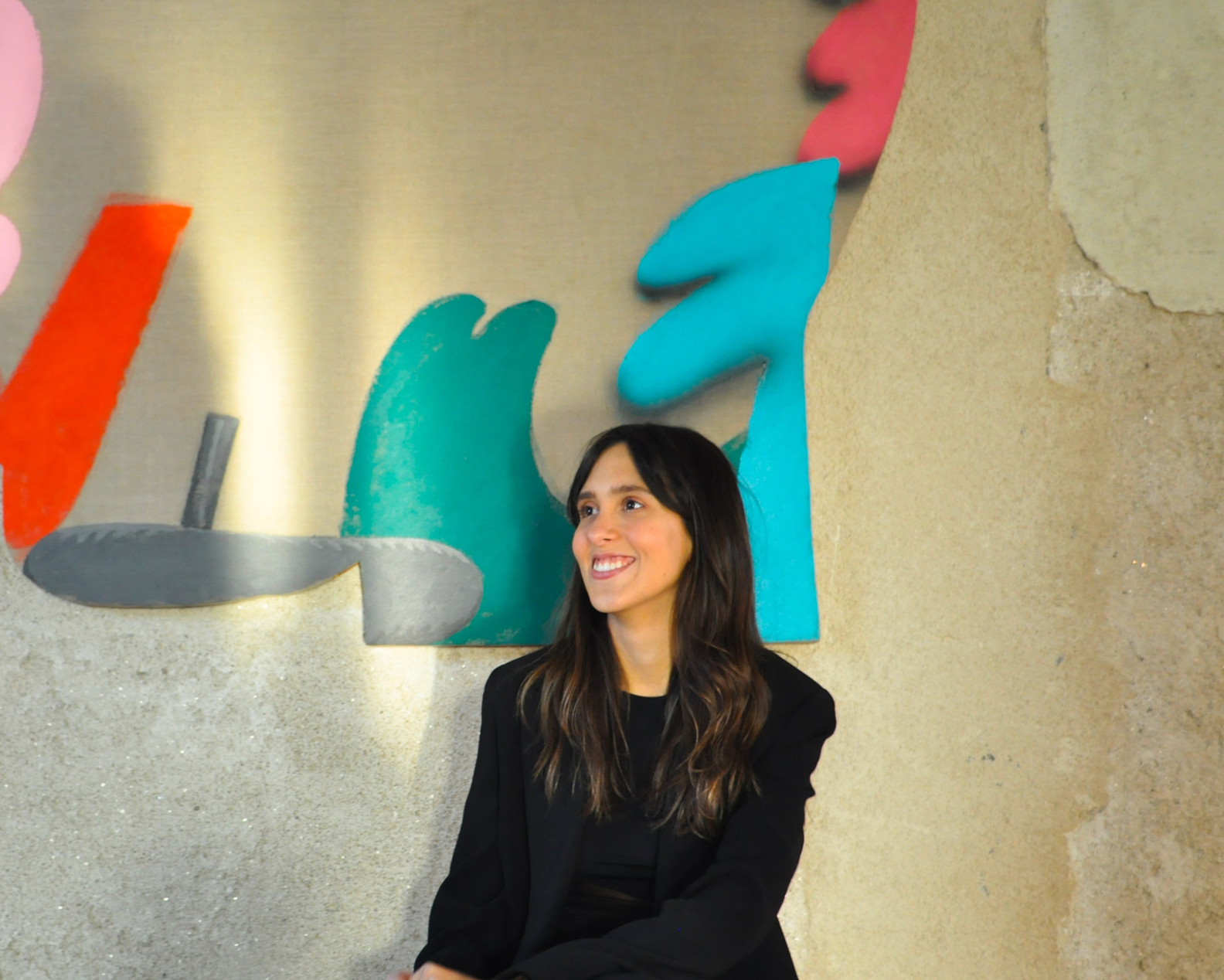
Having initially studied Communication Design at FBAUP, Mariana Monteiro transferred to ESAD in search of a more contemporary, digitally oriented education. Although the change was difficult, it proved decisive, as the combination of the two schools provided her with a broad and balanced view of academic tradition and creative innovation. She now embraces communication at a.li.as.
Was working at the company a natural choice?
I grew up surrounded by shoes because of my father’s profession. I remember, when I was little, passing by shoe stores with my father: he would go in and spend ages analysing the shoes. He would pick them up, measure them from all angles, and fold and unfold them. It’s a memory I carry with me. So, when the opportunity arose to contribute to this project in my area of expertise, starting with creating the brand identity and concept and moving on to brand communication, social media, and event presence… it made perfect sense. It’s a very special project for me, albeit a very challenging one!
I grew up surrounded by shoes because of my father’s profession. I remember, when I was little, passing by shoe stores with my father: he would go in and spend ages analysing the shoes. He would pick them up, measure them from all angles, and fold and unfold them. It’s a memory I carry with me. So, when the opportunity arose to contribute to this project in my area of expertise, starting with creating the brand identity and concept and moving on to brand communication, social media, and event presence… it made perfect sense. It’s a very special project for me, albeit a very challenging one!
What have been the biggest challenges so far?
We live in a time of great concern about environmental impact at all levels. The textile and footwear industry is one of the most resource-intensive and polluting sectors, which is why we made sustainability the cornerstone of a.li.as from the outset.
However, one of the major challenges is the trivialisation of the term ‘sustainable’. An increasing number of brands are using it as a marketing tool. But when we have a closer look at the materials they use and where these resources originate from, we realise that many are far from fulfilling the true meaning of sustainability.
Another challenge is consumer perception. While there is indeed a public that identifies with a more conscious lifestyle, they often turn a blind eye to the price of products and opt for a cheaper, mass-produced alternative. It is important to understand that responsible production involves rigorous research into the most suitable resources and processes, which naturally comes at a higher cost. A mass-produced item in China will always be cheaper, but this does not reflect its environmental and social impact. Therefore, the challenge lies in communicating this added value clearly and helping people to understand that investing in sustainable footwear also means investing in a better future.
How would you define a.li.as?
a.li.as is a Portuguese brand of truly sustainable footwear. It was born out of the need to create shoes that reconnect us with nature and make us aware of our body’s natural movement. Sustainability was at the heart of this project from the outset, but we soon realised that we could do more.
The next step was to incorporate the concept of barefoot footwear, which respects the natural anatomy of the foot, promotes healthier posture and restores freedom of movement often limited by conventional shoes. The challenge was to combine this philosophy with an appealing design. As many barefoot shoes on the market are visually unappealing, we collaborated closely with our designer to create casual, fun shoes that incorporate all the technical characteristics of barefoot footwear. We chose colours and details that break the mould and bring a sense of lightness to the concept. I think we definitely stand out from most other barefoot brands.
What advice would you give to a young person just starting out?
My advice would be not to be afraid to start small and learn as you go along. Don’t feel like you have to get everything perfect before launching a new idea. Believing in the idea is essential, but so is being willing to listen to those with more experience and adjust and improve as necessary. Surrounding yourself with people who share the same vision and add value makes all the difference. Above all, never lose sight of the ‘why’ behind the project, because that’s what will give you strength in difficult moments.
