
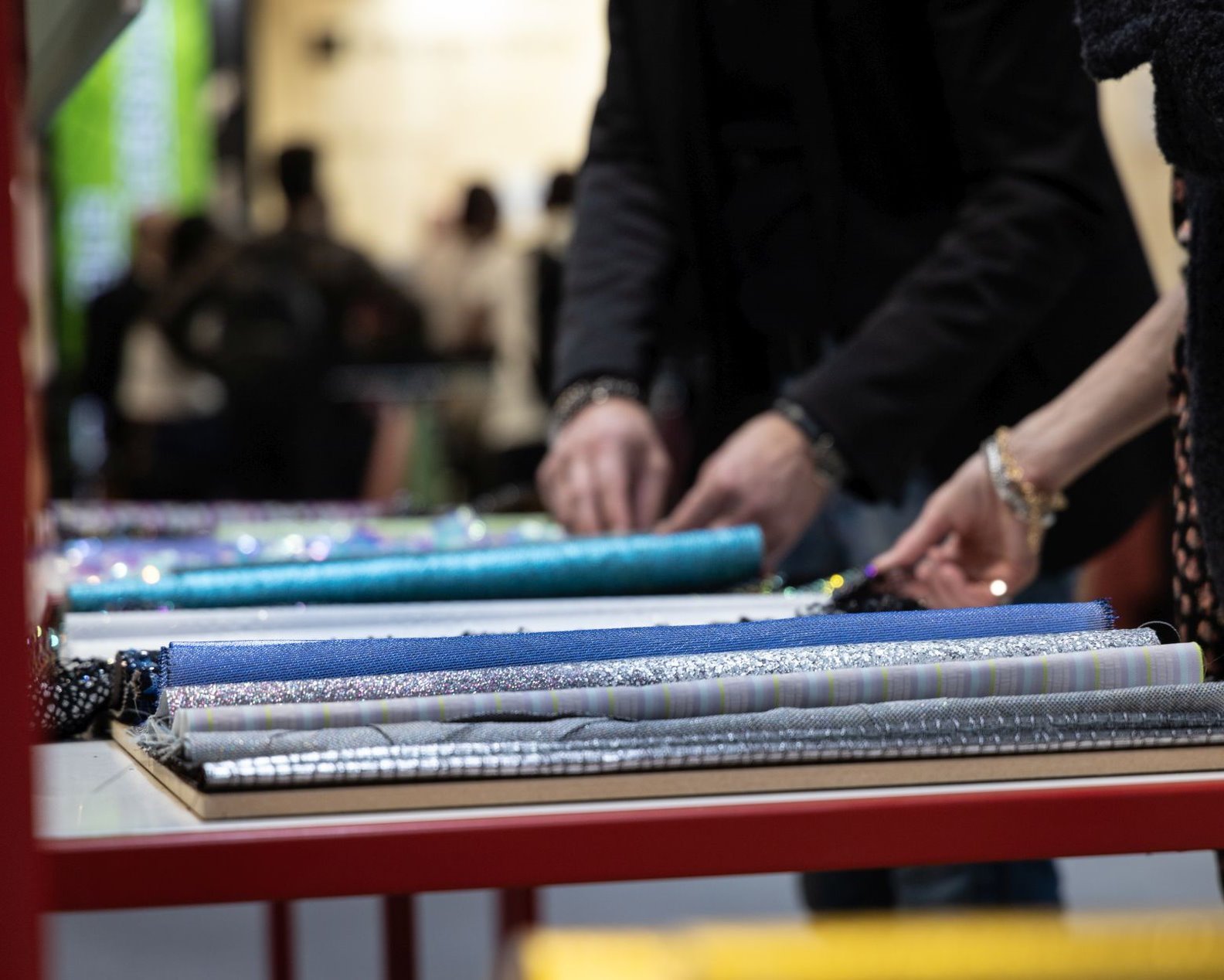
Making tomorrow bloom was the slogan of Lineapelle for February’s edition. The goal was clear: to be the edition of the return to normality. And, according to the organization, such was achieved.
The 101 edition of Lineapelle, dedicated to the summer season of 2024, closed with a feeling of great energy, which was confirmed by the large turnout of buyers and the quality of the networking work carried out at the fair. The 1 161 exhibitors present at the fair from 42 countries (61.7% Italian, 38.3% foreign) welcomed over 24 000 buyers: a growth of 55% compared to the previous February edition, and of 6%, compared to the winter edition (September 2022). The organization stated that this edition returned "to pre-pandemic internationality” levels, as 41% of visitors arrived from abroad, with a particular emphasis on European visitors (Germany, Spain, France, Portugal, the United Kingdom, and the Netherlands), as well as from the US.
Among the Portuguese tannery footwear components companies, the national delegation at Lineapelle was assured by 33 companies. There, the companies introduced several novelties and trends for summer 2024.
Multicouro is a regular participant in this event. "We have been doing the Lineapelle for many years, and we will continue to do so because it is an excellent stage to present our collections and products, to contact clients, for example from Asia and South America. This is the moment when these customers come to Europe and can get to know our products. It is also a moment of trust and strengthening relationships”, argues Rodolfo Andrade. "It is very important to be able to contact directly our clients, reducing the need to visit them. We have many customers from South and North America and Lineapelle allows us to stay in touch with them, as well as make new contacts”, says Ricardo Pinto from Combocal.
In their luggage, the Portuguese components and tanning companies brought to the fair new trends for the next warm season. And sustainability was, again, the common denominator between them. More informed and demanding, customers are already looking for concrete products. "I would say that the collective hysteria is gone, with information flowing well, so customers are better informed. The synthetics industry tried to pass on the idea that leather was a harmful product, but that idea has been deconstructed. Synthetics are PU-based, and very few are sustainable. On the contrary, leather is natural, biodegradable, a by-product of the food industry, and we concluded that if we don’t use this leather, we will have a serious problem”, commented Rodolfo Andrade.
Combocal also presented several surprising solutions for incorporating waste. Banana tree fibre, rice, cork, and corn are some options available. "In recent years, we have invested a lot in two major areas: the research for new environmentally friendly products and environmental certifications. Firstly, because the market demands it, and secondly because we want to provide our customers with new, more environmentally friendly options. A large part of our production incorporates recycled rubber. And it is something that we believe can be enhanced”, defends Ricardo Pinto. The commercial head of Combocal added that the company has a second line of products, "the rubber bio-composites, where we incorporate various types of waste, such as waste banana fibres, for example. Many residues are forwarded to recycling companies, but many end up in landfills. We try to give a second life to natural waste. In other words, we don't allow energy to be wasted. By incorporating this waste in the soles, we are reusing the waste and, on the other hand, we are reducing the environmental impact of a shoe”.
Customers are reacting favourably to these options. "There has been a lot of demand, especially for banana fibres. But there are other alternatives, such as coffee husks that are collected from the companies that do the roasting. There are usually destined to landfills. We also have industrial residues of tyres, coming from tyre-canvas”. Ricardo admits that the future lies in companies being increasingly "eco-efficient, taking advantage of product waste. We aspire to be a company with 0% waste”.
Sustainability and technology can form a successful partnership. Who can prove it is Bolflex. At Lineapelle, the company of components presented an exclusive application for customers. The goal is to allow them to test through virtual technology different colours and types of soles, without the need to produce a physical sample.
And how does sustainability enter into this equation? With a substantial reduction in the number of samples. "We had two problems to solve: customer access to information and the number of samples, often in different colours, that the customer needed”. This new application enables "customers to try the cut with the type of sole they are looking for. We have an updated catalogue, where they can consult our offerings, and we don’t need to have a physical sample to include it in it”, explains Flávio Ferreira.
Bolflex: sustainability and technology
Sustainability is one of the companies’ cornerstones. Through Rubberlink, the Felgueiras group has the patent for the rubber devulcanization process and product, which allows it to be recycled and reused in the production circuit. It all began with the dream of the company’s founder, António Ferreira, of putting an end to the waste from the footwear industry in Portugal. When he became aware of the tons of waste generated by his industrial activity, he didn’t stop until finding a solution to give new life to the waste.
It took two decades of research, experimental processes and a lot of investment: about eight million euros just in the past decade. Last year, the company was able to patent the rubber devulcanization process and the product resulting from it. In this process, Rubberlink was born, committing to "return the reusable rubber to the market, at more competitive prices than virgin rubber, with a quality of excellence”, argues António Ferreira in statements to Dinheiro Vivo.
"That’s 220 tons per year that stop going into the landfill”, says the head of the Bolflex group. But the company doesn’t treat only its waste. Besides the rubber waste, the company treats non-metallic materials, shoes, and thermoplastics from several industries. And it doesn’t end here. Rubberlink receives and processes neoprene wetsuits (used, for example, in surfing), latex gloves, car profiles and EVA boards, among other materials.
Although the solution has not yet "convinced” all Portuguese industrialists, the group is already receiving waste for treatment and valorisation from countries like Italy, Spain, France, England, Germany, Sweden, and even Chile and the US. The goal is to reach two thousand tons of waste treated for third parties, which is returned in pulp ready to be reused. "If I don’t grow in Portugal, I grow outside”, admits António Ferreira to Dinheiro Vivo.
The 101 edition of Lineapelle, dedicated to the summer season of 2024, closed with a feeling of great energy, which was confirmed by the large turnout of buyers and the quality of the networking work carried out at the fair. The 1 161 exhibitors present at the fair from 42 countries (61.7% Italian, 38.3% foreign) welcomed over 24 000 buyers: a growth of 55% compared to the previous February edition, and of 6%, compared to the winter edition (September 2022). The organization stated that this edition returned "to pre-pandemic internationality” levels, as 41% of visitors arrived from abroad, with a particular emphasis on European visitors (Germany, Spain, France, Portugal, the United Kingdom, and the Netherlands), as well as from the US.
Among the Portuguese tannery footwear components companies, the national delegation at Lineapelle was assured by 33 companies. There, the companies introduced several novelties and trends for summer 2024.
Multicouro is a regular participant in this event. "We have been doing the Lineapelle for many years, and we will continue to do so because it is an excellent stage to present our collections and products, to contact clients, for example from Asia and South America. This is the moment when these customers come to Europe and can get to know our products. It is also a moment of trust and strengthening relationships”, argues Rodolfo Andrade. "It is very important to be able to contact directly our clients, reducing the need to visit them. We have many customers from South and North America and Lineapelle allows us to stay in touch with them, as well as make new contacts”, says Ricardo Pinto from Combocal.
In their luggage, the Portuguese components and tanning companies brought to the fair new trends for the next warm season. And sustainability was, again, the common denominator between them. More informed and demanding, customers are already looking for concrete products. "I would say that the collective hysteria is gone, with information flowing well, so customers are better informed. The synthetics industry tried to pass on the idea that leather was a harmful product, but that idea has been deconstructed. Synthetics are PU-based, and very few are sustainable. On the contrary, leather is natural, biodegradable, a by-product of the food industry, and we concluded that if we don’t use this leather, we will have a serious problem”, commented Rodolfo Andrade.
Combocal also presented several surprising solutions for incorporating waste. Banana tree fibre, rice, cork, and corn are some options available. "In recent years, we have invested a lot in two major areas: the research for new environmentally friendly products and environmental certifications. Firstly, because the market demands it, and secondly because we want to provide our customers with new, more environmentally friendly options. A large part of our production incorporates recycled rubber. And it is something that we believe can be enhanced”, defends Ricardo Pinto. The commercial head of Combocal added that the company has a second line of products, "the rubber bio-composites, where we incorporate various types of waste, such as waste banana fibres, for example. Many residues are forwarded to recycling companies, but many end up in landfills. We try to give a second life to natural waste. In other words, we don't allow energy to be wasted. By incorporating this waste in the soles, we are reusing the waste and, on the other hand, we are reducing the environmental impact of a shoe”.
Customers are reacting favourably to these options. "There has been a lot of demand, especially for banana fibres. But there are other alternatives, such as coffee husks that are collected from the companies that do the roasting. There are usually destined to landfills. We also have industrial residues of tyres, coming from tyre-canvas”. Ricardo admits that the future lies in companies being increasingly "eco-efficient, taking advantage of product waste. We aspire to be a company with 0% waste”.
Sustainability and technology can form a successful partnership. Who can prove it is Bolflex. At Lineapelle, the company of components presented an exclusive application for customers. The goal is to allow them to test through virtual technology different colours and types of soles, without the need to produce a physical sample.
And how does sustainability enter into this equation? With a substantial reduction in the number of samples. "We had two problems to solve: customer access to information and the number of samples, often in different colours, that the customer needed”. This new application enables "customers to try the cut with the type of sole they are looking for. We have an updated catalogue, where they can consult our offerings, and we don’t need to have a physical sample to include it in it”, explains Flávio Ferreira.
Bolflex: sustainability and technology
Sustainability is one of the companies’ cornerstones. Through Rubberlink, the Felgueiras group has the patent for the rubber devulcanization process and product, which allows it to be recycled and reused in the production circuit. It all began with the dream of the company’s founder, António Ferreira, of putting an end to the waste from the footwear industry in Portugal. When he became aware of the tons of waste generated by his industrial activity, he didn’t stop until finding a solution to give new life to the waste.
It took two decades of research, experimental processes and a lot of investment: about eight million euros just in the past decade. Last year, the company was able to patent the rubber devulcanization process and the product resulting from it. In this process, Rubberlink was born, committing to "return the reusable rubber to the market, at more competitive prices than virgin rubber, with a quality of excellence”, argues António Ferreira in statements to Dinheiro Vivo.
"That’s 220 tons per year that stop going into the landfill”, says the head of the Bolflex group. But the company doesn’t treat only its waste. Besides the rubber waste, the company treats non-metallic materials, shoes, and thermoplastics from several industries. And it doesn’t end here. Rubberlink receives and processes neoprene wetsuits (used, for example, in surfing), latex gloves, car profiles and EVA boards, among other materials.
Although the solution has not yet "convinced” all Portuguese industrialists, the group is already receiving waste for treatment and valorisation from countries like Italy, Spain, France, England, Germany, Sweden, and even Chile and the US. The goal is to reach two thousand tons of waste treated for third parties, which is returned in pulp ready to be reused. "If I don’t grow in Portugal, I grow outside”, admits António Ferreira to Dinheiro Vivo.