
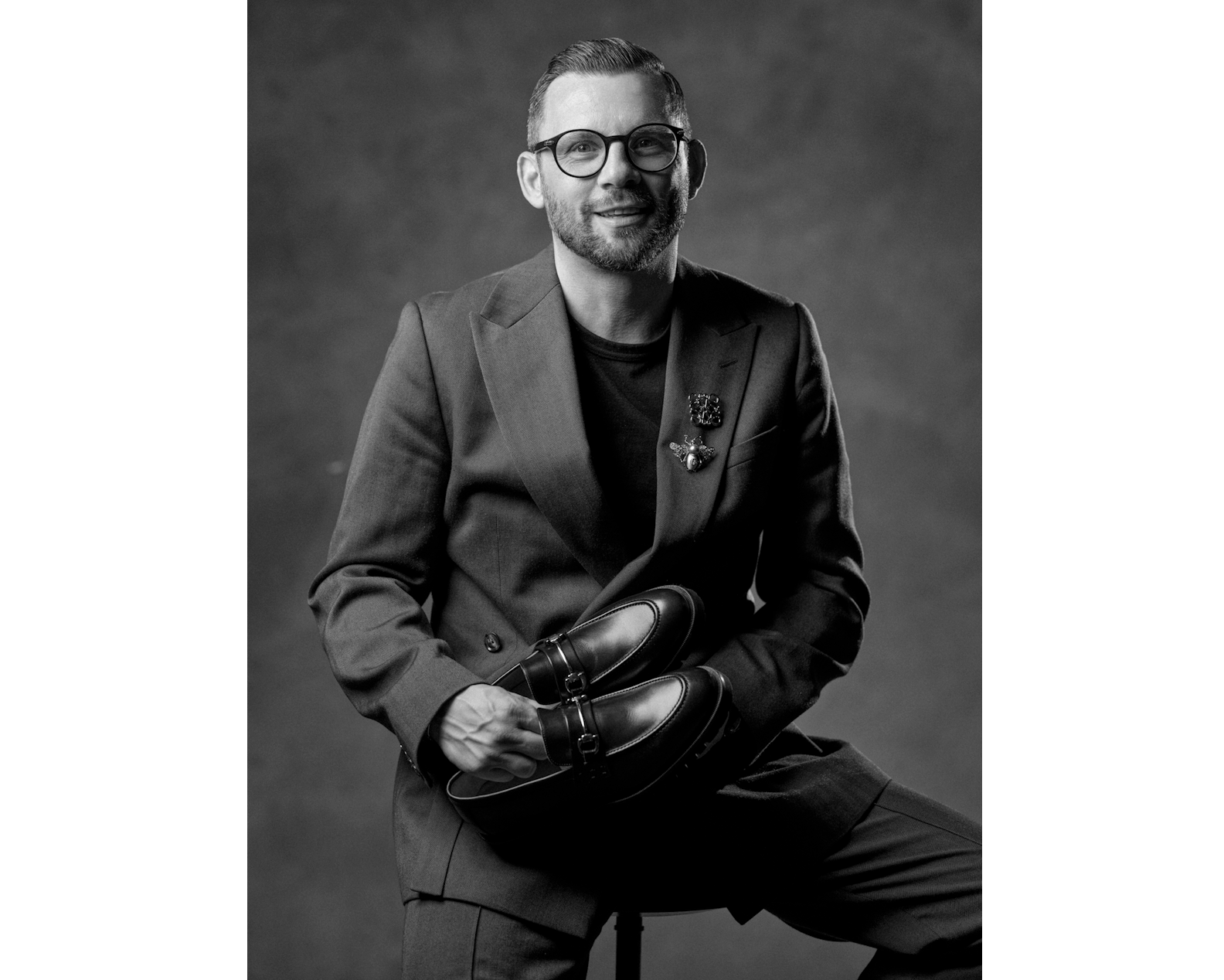
Portugal is the second-largest footwear producer in the European Union, exports around 90% of its production and has one of the most specialized industries on the continent. After investing more than €100 million in technology, innovation and sustainability, the Portuguese footwear sector believes the time has come to strengthen its commitment to the world’s largest footwear market. On December 1 and 2, APICCAPS, the Portuguese Footwear Association, will bring a carefully selected group of Portuguese brands to New York for the Portuguese Shoes Showcase at Ideal Glass Studios. Paulo Gonçalves, Executive Director of APICCAPS, explains the strategy.
Why is Portugal organizing the Portuguese Shoes Showcase in New York?
The United States is the most important footwear market in the world and we believe Portugal is still underrepresented here. We have an excellent industry, strong companies, internationally competitive products and decades of manufacturing experience. But our presence in the U.S. is still far below our potential.
We want to change that. The Portuguese Shoes Showcase is not simply an exhibition. It is part of a broader strategy to bring Portuguese companies closer to American buyers, retailers, distributors, agents and brands and, above all, to create business.
Ambitious, Centenário, Felmini and Nobrand are among the companies already confirmed. More than 10 leading Portuguese brands will take part.
We are being deliberately selective. We don't want the biggest possible event. We want the right brands, the right buyers and the right conversations.
You have said that "Portugal’s moment in the United States has arrived.” Why now?
Because several factors are coming together at the same time.
Second, over the last few years, the Portuguese footwear industry has invested more than €100 million in technology, automation, robotics, new materials and sustainability.
And third, the international trade environment is changing. The new U.S. tariff landscape is altering the competitive balance between Europe and some of the world's largest footwear-producing countries.
How do the new U.S. tariffs create an opportunity for Portugal?
They change the competitive equation. We should be very clear: Portugal will never compete by being the cheapest footwear producer in the world. That is not our strategy.
But when tariff differences reduce some of the price advantage enjoyed by competing sourcing countries, other factors become increasingly important: quality, reliability, flexibility, design, sustainability, speed to market and the ability to produce sophisticated products.
That is precisely where Portugal is strong.
The tariffs don't automatically create business for Portuguese companies. They create a window of opportunity. It is our responsibility to use it.
Of course, we cannot and do not want to compete with Asia on volume. Our model is different.
Our competitive advantage is the ability to combine industrial capacity with craftsmanship, technology with human knowledge, and scale with flexibility.
In a world where technology is increasingly available to everyone, know-how becomes even more valuable. Portugal has generations of people who know how to make shoes. That cannot be created overnight.
We have robotics, automation, digital production systems, advanced prototyping, new sustainable materials and increasingly sophisticated manufacturing processes.
More than €100 million has been invested in the modernization of the Portuguese footwear industry in recent years.
What does Portugal offer an American brand looking for a manufacturing partner?
First, European manufacturing and decades of expertise.
Then flexibility. Portuguese companies can work with international brands on product development, prototypes, materials and relatively small or medium-sized production runs, but they also have the industrial capacity to grow with their customers.
That creates an ecosystem capable of taking an idea and turning it into a finished product very quickly.
For American brands looking to diversify their supply chains or develop high-quality footwear in Europe, Portugal should be on their radar.
Portugal has a long tradition of private-label manufacturing and product development. We have the knowledge and industrial infrastructure to become a strategic manufacturing partner for American brands.
The United States is already growing as a market for Portuguese footwear. Is that encouraging?
Very much so. In the first seven months of 2026, Portuguese footwear exports to the United States increased 12.5% to €57 million, and the U.S. became our fifth-largest export market, overtaking the United Kingdom.
But it also shows how much potential remains. Portugal's presence in the American market is still relatively small compared with our European competitors and, especially, compared with the sheer size of the U.S. market.
So what would success look like for this initiative?
Not the number of people who walk through the door at Ideal Glass. And certainly not the number of shoes we display.
If you had to give American buyers and brands one reason to look at Portugal now, what would it be?
Because they may be surprised by what they find.
Portugal has the heritage of a traditional European footwear-producing country, but today it also has technology, design, innovation, flexibility and international ambition.
We have invested heavily. Our companies have evolved. The global sourcing environment is changing. And American buyers and brands are looking for new solutions and reliable partners. All the pieces are coming together.
For Portuguese footwear, the time for the United States is now. And for American companies looking for a new European partner, the time to discover Portugal is now.
The United States is the most important footwear market in the world and we believe Portugal is still underrepresented here. We have an excellent industry, strong companies, internationally competitive products and decades of manufacturing experience. But our presence in the U.S. is still far below our potential.
We want to change that. The Portuguese Shoes Showcase is not simply an exhibition. It is part of a broader strategy to bring Portuguese companies closer to American buyers, retailers, distributors, agents and brands and, above all, to create business.
What exactly will happen in New York?
On December 1 and 2, during FFANY Market Week, we will present at Ideal Glass Studios in Manhattan a very carefully selected group of Portuguese footwear brands.Ambitious, Centenário, Felmini and Nobrand are among the companies already confirmed. More than 10 leading Portuguese brands will take part.
We are being deliberately selective. We don't want the biggest possible event. We want the right brands, the right buyers and the right conversations.
The showcase will be complemented by individual mentoring, targeted meetings, public relations and, importantly, commercial follow-up. We don't want companies to arrive in New York on December 1 and leave on December 2 with the project finished. That's when the real work should begin.
Because several factors are coming together at the same time.
First, Portugal has never been as prepared as it is today. We are the second-largest footwear producer in the European Union. We have an extremely sophisticated industrial cluster, generations of shoemaking knowledge and companies accustomed to working for some of the most demanding international markets.
And third, the international trade environment is changing. The new U.S. tariff landscape is altering the competitive balance between Europe and some of the world's largest footwear-producing countries.
Put all of this together and I think we can say very clearly: Portugal is ready for America.
They change the competitive equation. We should be very clear: Portugal will never compete by being the cheapest footwear producer in the world. That is not our strategy.
But when tariff differences reduce some of the price advantage enjoyed by competing sourcing countries, other factors become increasingly important: quality, reliability, flexibility, design, sustainability, speed to market and the ability to produce sophisticated products.
That is precisely where Portugal is strong.
The tariffs don't automatically create business for Portuguese companies. They create a window of opportunity. It is our responsibility to use it.
Can Portugal really compete with the major global footwear producers?
We already do. Portugal is the second-largest footwear producer in the European Union, and Portuguese companies work at a very high level for international brands and markets.Of course, we cannot and do not want to compete with Asia on volume. Our model is different.
Our competitive advantage is the ability to combine industrial capacity with craftsmanship, technology with human knowledge, and scale with flexibility.
In a world where technology is increasingly available to everyone, know-how becomes even more valuable. Portugal has generations of people who know how to make shoes. That cannot be created overnight.
How has the Portuguese footwear industry changed in recent years?
Dramatically. There is sometimes an outdated perception of the European footwear industry as predominantly traditional and labor-intensive. Anyone visiting Portuguese factories today would be surprised.We have robotics, automation, digital production systems, advanced prototyping, new sustainable materials and increasingly sophisticated manufacturing processes.
More than €100 million has been invested in the modernization of the Portuguese footwear industry in recent years.
But we have been careful not to lose what makes us different. Technology does not replace our craftsmanship; it makes it stronger. That combination is probably one of Portugal's greatest competitive advantages.
First, European manufacturing and decades of expertise.
Then flexibility. Portuguese companies can work with international brands on product development, prototypes, materials and relatively small or medium-sized production runs, but they also have the industrial capacity to grow with their customers.
Another advantage is our cluster. Within a relatively small geographical area, you can find footwear manufacturers, sole and component producers, tanneries, technology companies, designers, research organizations and a dedicated footwear technology center.
For American brands looking to diversify their supply chains or develop high-quality footwear in Europe, Portugal should be on their radar.
Are you looking only for retailers and buyers in the United States?
No. That is very important. Naturally, we want to meet department stores, independent retailers, e-commerce platforms, distributors, wholesalers and agents. But there is another enormous opportunity: American brands looking for manufacturing partners in Europe.
So our message is not simply "buy Portuguese shoes.” It is also "make your next shoes in Portugal.”
Very much so. In the first seven months of 2026, Portuguese footwear exports to the United States increased 12.5% to €57 million, and the U.S. became our fifth-largest export market, overtaking the United Kingdom.
That tells us there is momentum.
I prefer to look at that gap as an opportunity.
Not the number of people who walk through the door at Ideal Glass. And certainly not the number of shoes we display.
Success means business. It means an American retailer placing an order with a Portuguese brand. An agent deciding to represent one of our companies. A U.S. brand choosing Portugal as its manufacturing partner. And, six or twelve months later, those relationships continuing to grow.
We are not going to New York for two days. We are going to New York to build a market.
Because they may be surprised by what they find.
Portugal has the heritage of a traditional European footwear-producing country, but today it also has technology, design, innovation, flexibility and international ambition.
We have invested heavily. Our companies have evolved. The global sourcing environment is changing. And American buyers and brands are looking for new solutions and reliable partners. All the pieces are coming together.
For Portuguese footwear, the time for the United States is now. And for American companies looking for a new European partner, the time to discover Portugal is now.