
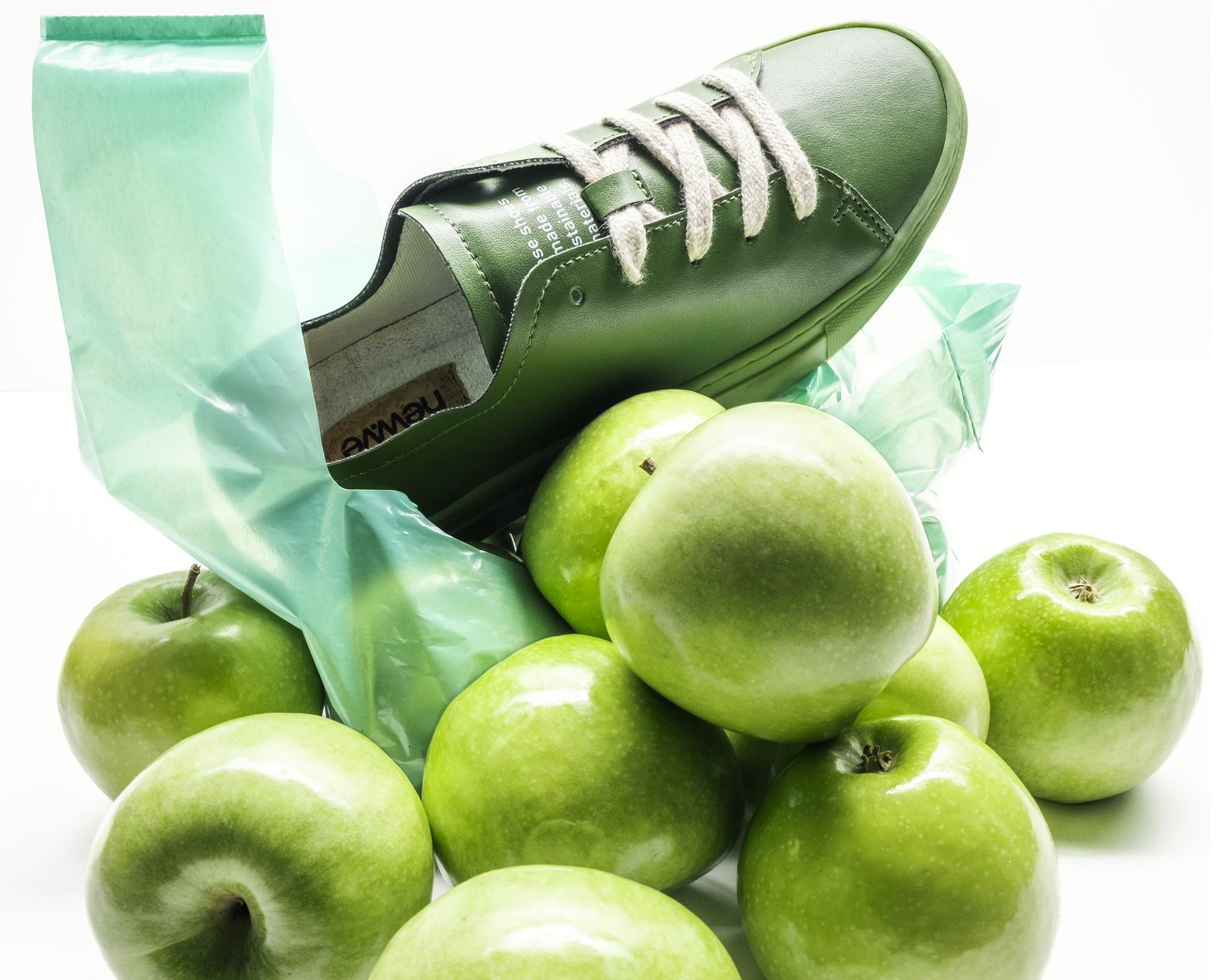
Rice, coffee grounds, apple peels, or plastic bottles. In the footwear industry nothing is wasted, everything is transformed. Within the scope of the BioShoes4All project, a new generation of products is under development.
The footwear cluster intends to "be an international benchmark in the development of sustainable solutions, strengthening Portuguese exports based on a highly competitive national production basis, underpinned by knowledge and innovation”. Maria José Ferreira assumes that "the BioShoes4All project has the ambition of inducing a radical change in materials, technologies, processes, and products of footwear and leather goods, generating sustainable solutions, economically valuable internationally”. "This ambition – continued the coordinator of the project - is supported by the consortium of excellence that we established, with 70 partners from different sectors, from biological resources, materials, chemicals, components, footwear, leather goods, to producers of production technologies and software, waste valuers, traders and retailers, which, altogether, will share resources, risks, and opportunities”.
Overall, the BioShoes4All, co-financed by the RRP (Portuguese Recovery and Resilience plan) measure C12 sustainable bioeconomy, "aims at the development and production of new biomaterials and components, anchored in the principles of the circular bioeconomy and sustainable development in all its dimensions, creating differentiated solutions that are valued by both clients and consumers, helping catalyse a new sustainable bio-based economy, the efficient valorisation of national and regional bio-resources and decarbonization”.
Furthermore, it means to foster the "design and implementation of new approaches and technologies designed to minimizing and valorising post-production and post-consumption waste, as well as the agile and eco-efficient production of materials, components, footwear and leather goods with a smaller environmental footprint, recycled and recyclable, in the context of a circular green economy, favouring increased of materials’ life cycles, the more efficient management of material and energetic resources, carbon neutrality and the fight against climate change”.
50 new products in the pipeline
In the next three years, around 50 new products "with a better ecological footprint” will be developed, "25 industrial pilot lines will be implemented, more than 50 publications will be edited, and a large number of dissemination, promotion and training actions will be carried out”, revealed Maria José Ferreira.
The coordinator of the BioShoes4All project believes that it is possible to develop plant bio fibres and bio fillers to create new materials and components, chemical bioproducts for leather, new materials and footwear, bio leather for footwear and leather goods desirably up to 100% biological or functionalized (e.g., resistant to microorganisms or heat), or alternative materials to leather for the exterior and lining of uppers, belts, and bags.
Additionally, an investment will be made in the development of "biopolymers and biological materials, of natural or synthesized origin, for soles, midsoles or accessories, thermoplastics, thermosets and recycled composites for components, soles, insoles or shoes, new adhesives, new products of leather goods and ecological footwear with a smaller environmental footprint, as well as tools for sustainability, traceability or circularity, in advanced and eco-efficient technologies for the production of leather, materials, components, footwear and leather goods, in the recycling of post-consumer footwear. The project also foresees supporting awareness-raising actions, knowledge transfer or training-actions, and content dissemination or digital training”.
Five intervention pillars
The BioShoes4All project is divided into five intervention pillars (biomaterials, ecological footwear, circular economy, advanced production technologies and training, and promotion), and to achieve its aims outlined "a wide and complementary range of actions”, involving "research, development and innovation from the industrial research process to the transfer to the market”, "innovation concerning processes and organization, including new production lines and productive investments”, as well as "training, communication and broad promotion of the project and the cluster at both national and international scales, with content aimed at consumers, companies, and institutions”.
Portugal’s role in the world
Estimations suggest that the fashion industry is responsible for 2% to 8% of global carbon emissions, which has a great impact on climate. For this reason, according to Maria José Ferreira, "it is essential to establish and implement strategies to tackle global warming, specifically, to contain unsustainable patterns of production and consumption and to take actions to reduce carbon emissions and environmental impact”.
For the coordinator of Bioshoes4all, "the fashion industry’s great ability to communicate and influence consumers can transform the current business model”. She adds that "it is vital to optimize resources, evaluate and control greenhouse gas emissions, use renewable sources of materials and energy, as well as materials, products, technologies, and processes with a smaller environmental footprint, to comply with the objectives set for 2030 and achieve carbon neutrality by 2050”.
BioShoes4All ought, in her view, to contribute to "the cluster’s ambition to remain at the forefront of research & innovation in new market segments for value-added products favoured by the population, which is increasingly informed and demanding, seeking products that are more environmentally friendly, recycled, bio-based as an alternative to fossil-based materials, products with fashion, technical, functional, customized and traceable content that meet the requirements and wishes of customers and consumers, contributing to the decarbonization and the double climate and digital transition, solving identified constraints and seizing emerging opportunities”.
In BioShoes4All, the first pillar proposes the study and development of new bio leathers, biomaterials, biocomposites, components and processes through the incorporation of bio-based materials, including biomass and agro-industrial by-products, a reduction in the use of mainly fossil-based materials, an increase in the efficiency of resource use and the elimination of critical substances.
The second pillar undertakes the development of methodological studies of eco-design and environmental footprint of products, of new concepts of ecological footwear and leather goods with a lower environmental footprint, durable, repairable, recyclable, differentiated, customizable with high added value.
The third pillar aims to develop and demonstrate solutions to regenerate/value the main typologies of production waste in the Cluster and to initiate the valorization of post-consumer products, increasing circularity in production processes along the value chains and industrial symbioses.
The fourth pillar refers to the provision of innovative technologies for the vertical and horizontal ‘digitalization’ of the Footwear Cluster 4.0, namely solutions for tracking production processes and products, advanced planning, automation/robotization of critical production operations and introduction of eco-processes.The last one entails the preparation and implementation of the global actions of Capacity Building and Promotion and Dissemination of the project, in articulation with the work to be carried out in each of the Pillars.
Sign in / Sign Up to read more about this article!